
Bullet Train Journeys
Japan Pt 2: Kyoto, Osaka, and Karuizawa

I’ve romanticized Japanese trains since high school. Less for its technological innovation, but more for all that it signifies — a hollow forlornness, temporality, serendipity.
Eight-o-clock AM. The train let out a forlorn whistle as it pulled into the station. A slight breeze wafted, tickling the to-be passengers with a fresh reminder of the lovely spring morning.
— An excerpt from a short story I wrote in high school senior English
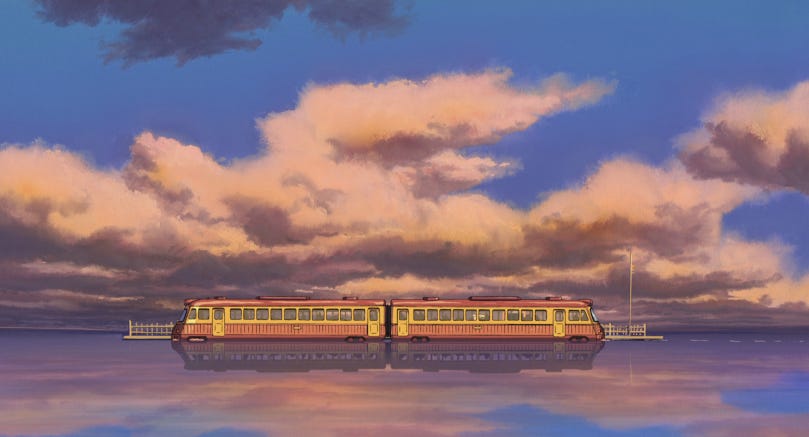
The Shinkansen sticks out among of all the high-speed trains I’ve ridden, including the Beijing—Shanghai gāotiě, the London—Paris Eurostar, and the DC—NYC Amtrak. The Amtrak is notoriously clunky, more like a prisoner’s train compared to its brightly-lit, hospitable Asian counterparts. Even the Chinese gāotiě lacks the mysticism of the Shinkansen, reminding me of a train that sends soldiers to their army barracks. With emphasis on its speed and technological innovation, it feels like mainly a flex of Chinese economic power.
When sitting in a Shinkansen, I needed no distractions to keep me at bay. The ride itself was a journey to savor, my eyes fixed to the landscape outside. From Tokyo Station, conjoined skyscrapers slowly morphed into pale apartment complexes, and then off-white three-storied homes with laundry drying outside. We dove into the side of a mountain, everything turned black, and emerged to see that all the houses were gone. Now, forested hills bulged out of farmland like the curves of a Chinese dragon swimming at the water’s surface.
Kyoto: Truly Solo
I blame the lure of the landscape for triggering a series of unfortunate events on the way to Kyoto. When the train stopped, I realized I’d ridden all the way to the end of the line to Shin-Osaka, and had to ride the train back. And, I’d misplaced my tickets.
Nonetheless, I pulled into Kyoto with knees bouncing and nose pressed against the train window. At long last, I had made it to the city that everyone said I’d enjoy even more than Tokyo—and mind you, I like Tokyo a lot.
The first night while strolling through Shijo Dori, Kyoto’s main shopping street, I felt like I was walking through a Lego set. Any “traditional” architecture was just a shell for the neatly lined row of air-conditioned, well-lit specialty shops selling boutique matcha desserts and gauche kimonos. Shanghai’s Yuyuan garden and Beijing’s Dashilan near Tiananmen Square reflect a similar manufactured feel. But in China, where there’s a literal amusement park with all the iconic landmarks of the world,1 this is expected. I hadn’t thought Kyoto would be the same. There was a foreigner everywhere I turned, perhaps owing to the city’s much smaller size than Tokyo, but I suspect it’s also because these foreigners have been lured by Kyoto’s promise of a glimpse into Old Japan’s absolute zen and tradition.
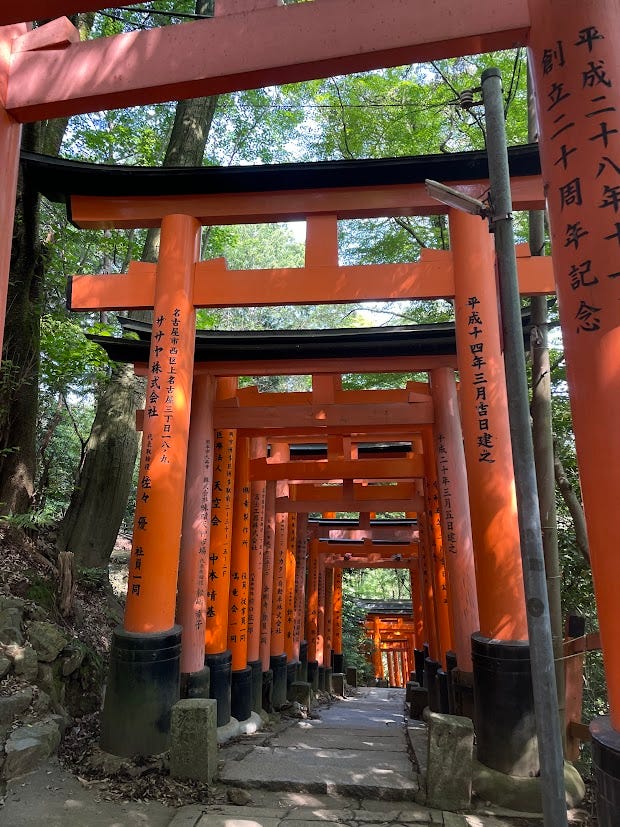
To capture the Old Japan ambiance requires venturing out into the mountaintops. Deep into the pathway of scarlet torii in Fushimi Inari, looking up at the shaded groves, all that pierced the crisp air was birdsong. After spending hours funneling house music through my AirPods, finally my ears could breathe.
One of my favorite things about solo travel is the freedom to wander. At Arashiyama Park, I entered a rickety gate with a sign that said “in out ok. open shut” and found myself the only soul for miles around. Without service, a map, nor road signs to guide me, I hiked for an hour with my own thoughts. When at last I reached the Mt. Ogura view point, I looked over the sprawling flat city, surrounded by lush green rolling hills and a soft river flowing through its heart (the source of the pure water that makes Kyoto’s tofu so legendary). The city stood majestic and imperial, something out of a period drama.


Indeed, my favorite ways to learn about the city are top-down and bottom-up. In Kyoto, “bottom-up” meant wandering down Nijo Dori, popping in random local used bookstores and calligraphy shops. Kyoto’s grid-like structure meant that I never felt lost while soaking in the love for the arts and simplicity.


After a long day of temple hopping, I took up a friend’s recommendation to go to L’escamoteur, an experiential cocktail bar. Opened by a French mixologist, the bartenders hail from all over the world, exuding a joviality and chatter not found among locals. While sipping my fruity cocktail, head already flushed, I whipped my head around at a familiar voice; low and behold, it was a middle school classmate! In Kyoto, of all places at a bar on a Tuesday night!
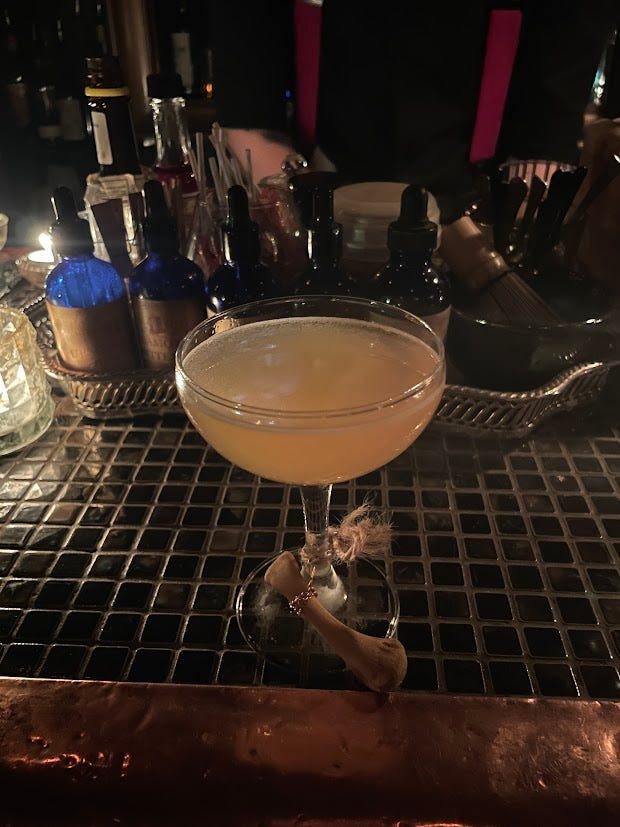
Call it a chance encounter, but I’d owe it more to self-selection. These kinds of places attract people like us: fresh graduates from the West with some disposable income, looking for an Instagrammable night in an otherwise day-time centric city.
Osaka: The Commercial Matrix
If Kyoto is a super-sized Yanaka neighborhood of Tokyo, then Osaka is Shinjuku blown up to an entire city. In Kyoto, the stations are ruled by uniformly-dressed school girls in their pleated skirts and working male professionals sweating in their black-tie suits. Meanwhile, the frantic train stations of Osaka display an amalgamation of fashion styles, from harajuku to Y2K.
Rather than quaint, quiet streets with locals running their own boutiques, Osaka’s streets are lined with glamorous department stores and shopping malls. “Bottom-up” here means starting at the accessory and handbag floor of a department store, riding the escalators up to women’s apparel, men’s apparel, athleisure, cafes, art galleries, and restaurants. When at last you reach the top level, sunlight is a blessing to your zombied eyes, and you emerge onto a rooftop that overlooks the janky jigsaw of commercial buildings.
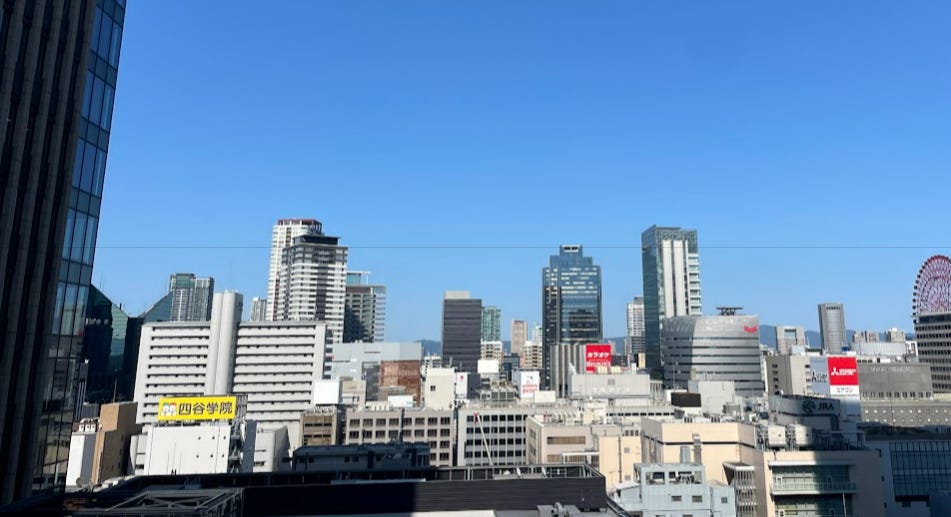
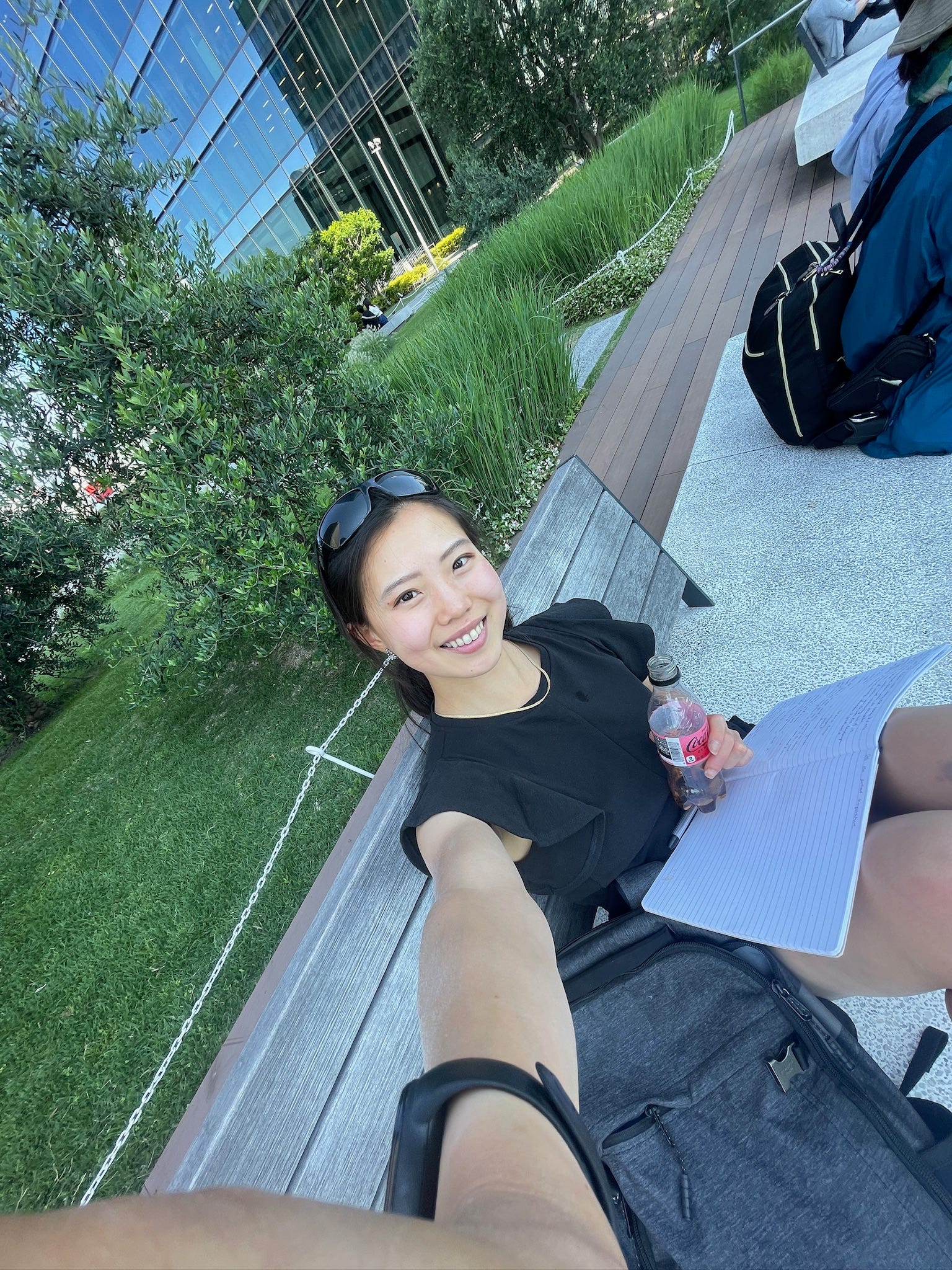
The rooftop of department stores are my favorite top-down hidden gems of Japan’s shopping districts. My diet coke and notebook make best buds 🤗
Karuizawa: The Hamptons of Japan
Taking the bullet train with friends in the reserved carriage for a weekend getaway is a luxury that lives rent-free in my brain. An hour flew by as the five of us chit-chatted away, stunned by how our lives have overlapped countless times in Tokyo, London, New York City, and D.C.
A cool alpine breeze hit us as soon as we exited the train. We’d arrived in Karuizawa, a small resort town northwest of Tokyo that artist Yoko Ono once described as “like the Hamptons, except it’s in the mountains.”
With its Alpine-style buildings, forest walks and outdoor onsen (hot spring baths), it is a deliciously quiet spot, with a "timeless allure". It's also lovely in winter, with good ski slopes nearby. And in recent years, renowned architects have built hotels and houses here, lending it "a new and decidedly modern appeal".
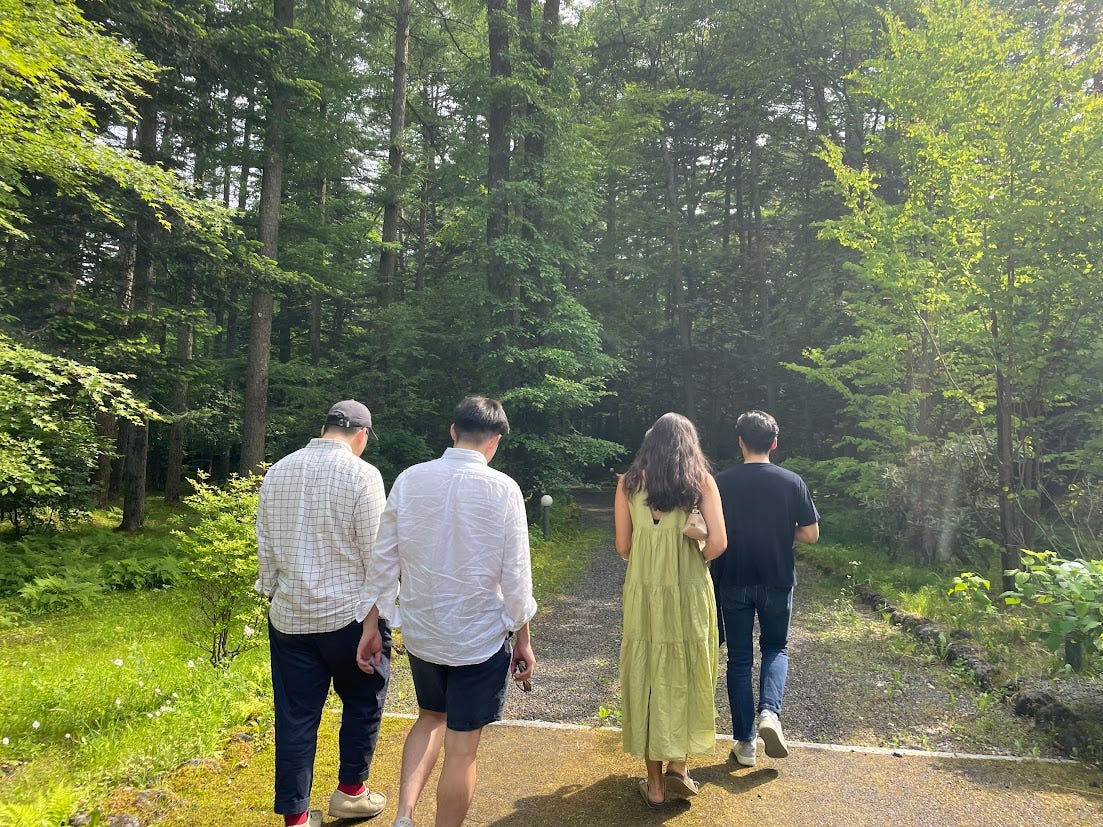
After securing our cute rental Nissan, we strolled through Old Ginza Street. The village-like lane is lined with specialty shops selling honey, ceramics, cheese, and other knick-knacks that leave you wondering how the hell someone thought about transporting them to a mountain village in Japan. At first, I didn’t understand how these stores survive given now niche the products are. But when I came across a restaurant selling roast beef wrapped in pizza, I suddenly understood how the forested air tickled the urge to spend on the most random things. “When in Karuizawa…”


When in Karuizawa, you must go to an onsen, especially one with an outdoor area. Initially, I hesitated at the idea of going to a hot spring completely naked. It had less to do with body insecurity, but rather an instinct telling me that having my entire body out in the open is indecent. Any doubts were washed away by the warm water soothing my skin, nonjudgmental in the way it hugged the pooch of my post-yakiniku belly.
The wind carried intimate whispers, safeguards spilling into sisterly secrets. Nearby, daughter-mother-grandmother gossiped as they dried each other’s hair in a generational circle. I realized then, that the appeal of the onsen is not only the liberation of the body, but also of the mind.
Karuizawa represented the ultimate form of freedom. I’d flown to Tokyo to escape America, and then ended up where Japanese people go to escape Tokyo. Within the four walls of evergreen trees, I shed any preconceived notions of how to spend time. No itinerary, nothing but the company of my friends and our futons to sleep on.


Shenzhen’s Window of the World